
Is Your Workplace Like Downton Abbey?
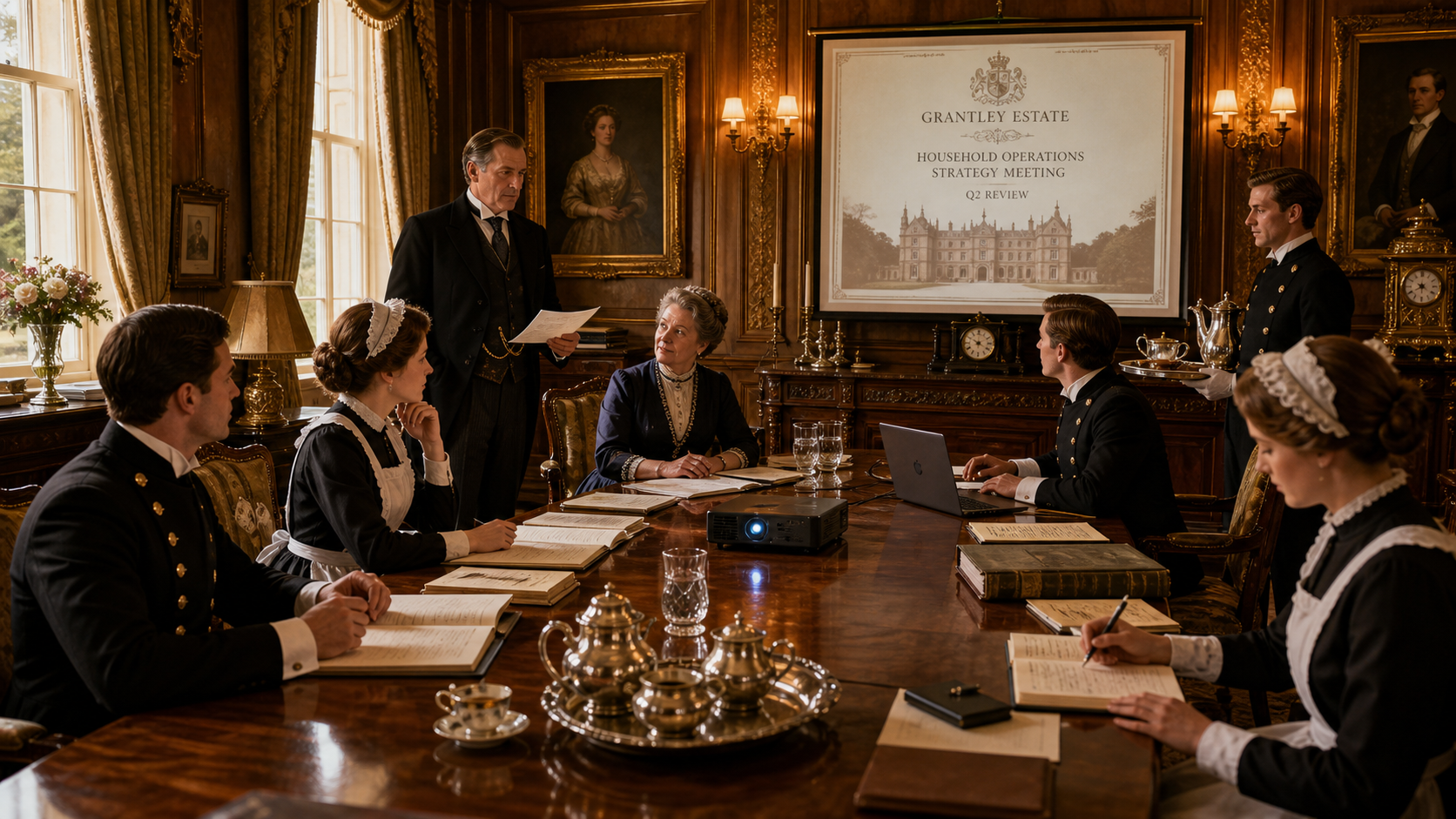
I’m embarrassingly late to Downton Abbey. I just finished binge-watching it, and one thing tickled me: the workplace dynamics downstairs in 1920 look a lot like the workplaces I see in 2025. Different clothing, same humans.
It turns out the things that make teams thrive, or unravel, haven’t changed much over a century. Here are three leadership lessons that stand out.
1. Culture beats everything, and everyone knows when it's off.
Downstairs at Downton, everyone knows the norms. They know what “good work” looks like, how to behave, and what will (and won’t) fly with Mr. Carson. You may not like Carson's style, but he’s crystal clear about what matters, at least for the team he runs.
Modern teams are starved for that clarity. People don’t need perfection. They just want to know what game they're playing and how to succeed.
Leadership takeaway: If you don’t name your culture, your people will invent one (which is incidentally when gossip and speculation start filling the gaps). That rarely goes well.
2. Purpose keeps people grounded. They want to know the “why.”
Downton Abbey isn’t just a house. It’s a whole ecosystem: economic, social, and symbolic.
Some characters believe deeply in its purpose, others question it or rebel against it. But everyone’s behaviour makes more sense once you understand what they think the estate is for, and their role in it.
Today’s workplaces are the same. Teams struggle when people can’t answer “Why are we doing this?” A mistake many leaders make is they wait to have a grand mission and purpose. But employees just need a coherent one.
Leadership takeaway: When people understand why the work exists, they show up differently.
3. Change and modernization are inevitable, but pace and openness matters.
In the show, there is a relatable tension between tradition and change: electricity, new jobs, shifting expectations.
Some embrace it, some resist, some try to quietly ignore it.
The estate evolves best when change is paced well: not too fast that people panic, not too slow the house falls behind. Just steady enough that people have time to adjust, learn, and feel included.
And, things are better when Lord Grantham lets himself be influenced by the people around him, and when he lets them question his beliefs and expand his thinking. He doesn’t always like it, but he listens, processes, and adjusts, at times, reluctantly.
Leadership takeaway: You earn trust and have better outcomes when you listen to others, stay influenceable, and move at a pace people can adapt to.
Why this matters
Wherever you lead, the truths are the same:
People want clarity.
They want meaning.
They want leaders who are firm in values and flexible in thinking.
Maybe that’s why Downton Abbey still resonates. It isn’t only interesting for the fashion or the beautiful estate.
It’s about leadership: the timeless kind.
I’d love to hear from you: which Downton Abbey leadership lesson shows up in your workplace?